



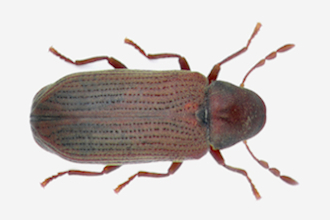
Woodworms are parasitic insects which consist a real threat as they cause great damage both to nature and treated wood.
These insects feed on whole wood material. The first stage in the life cycle of woodworms is the egg stage. When woodworms hatch from their eggs, turn into larvae, then into pupae and finally into adults. Adult stage is the final stage in life cycle of woodworms. Inside wood, larvae live from 1 to 5 years. This stage is concerned as the most destructive as large holes are opened, causing further damage.
COMMON FURNITURE BEETLE
Common furniture beetle is the most popular insect in our country (Anobium pinctatum). This small cylindrical beetle, 4 to 6mm long, has reddish-brown color and longitudinal cracks on its back. The last three parts of its antennae are longer than the others. The larva is cream-white with dark brown drops and has double string of thorns on its back. The common beetle has two hard outer wings.
Adult beetles come out in Spring, breed and soon after they lay their eggs. The female beetle gnaws a small amount of wood in order to estimate starch and moisture content. Only when starch content exceeds 3%, the female beetle deploys eggs into the pores of wood. Most of species lay about 50 eggs.
The common furniture beetle attacks furniture, artwork, ceilings, roofs and floors. The adult beetle holes are circular, have 1,5mm diameter and diagnostic value. Their damage can be identified by the small round holes that appear on wooden floors, furniture, woods, decorative and other surfaces as well as by the presence of fine powder or sawdust falling from the entry holes and accumulating in small piles.
Termites
Termites are considered as the most destructive pest of all. They can cause untold amounts of monetary damage to buildings and structures. Termites feed on wood and other cellulose-based materials. Although some building structures are more susceptible to a termite infestation, each house is vulnerable to their attack. While most homeowners will worry more about flooding or fire, termite damage can be a more common and prevalent problem.
Over time, damages caused by termites can develop into major disasters. These damages can weaken wood, causing costly repairs and structural disasters to premises.
Signs of termite presence in your area
- Worker termites feed on wood, manufacturing structural honeycomb galleries that are parallel to wood grooves. These damages can go undetected at first sight as termites weaken wooden structures internally.
- In winter/spring period the winged unproductive termites are more activated and noticed around exterior lighting and windowsills. These are places in which termites make short flights and slough their wings, making their presence more visible.
People can be understandably worried about the presence of terminates. Luckily, terminate control treatment has advanced rapidly the recent years.
Termites are very persistent parasites and it is always interesting to treat them. Owners should not attempt to resolve termite infestations on their own.